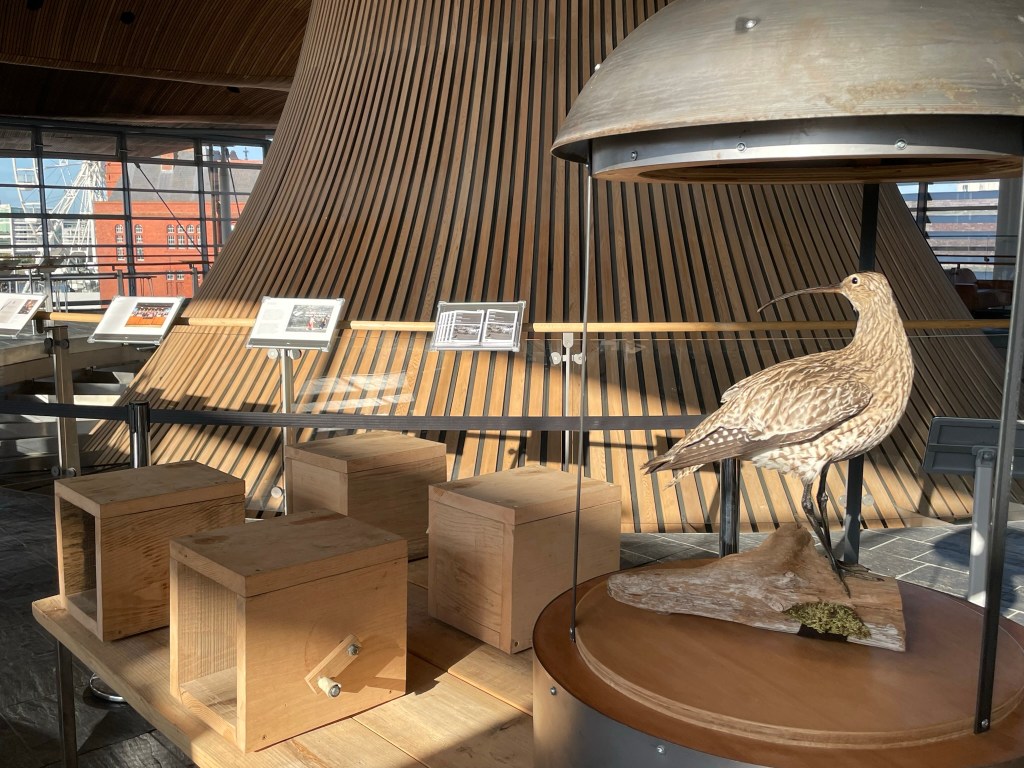
Two years after the journey began with a walk to a limestone cave on Bryn Alyn the call of the curlew is ringing out across the Senedd, the beating heart of Welsh democracy. Telling a story spanning millennia of an ever-changing landscape, Lynx Cave is a time machine and served to create an essential context. In seeking truth and solutions to the climate and biodiversity crises it is vital that we step out of contemporary society’s increasing preoccupation with its own fleeting moment such as to adopt a more universal view. By exploring, understanding and respecting the past we can shape a better future.
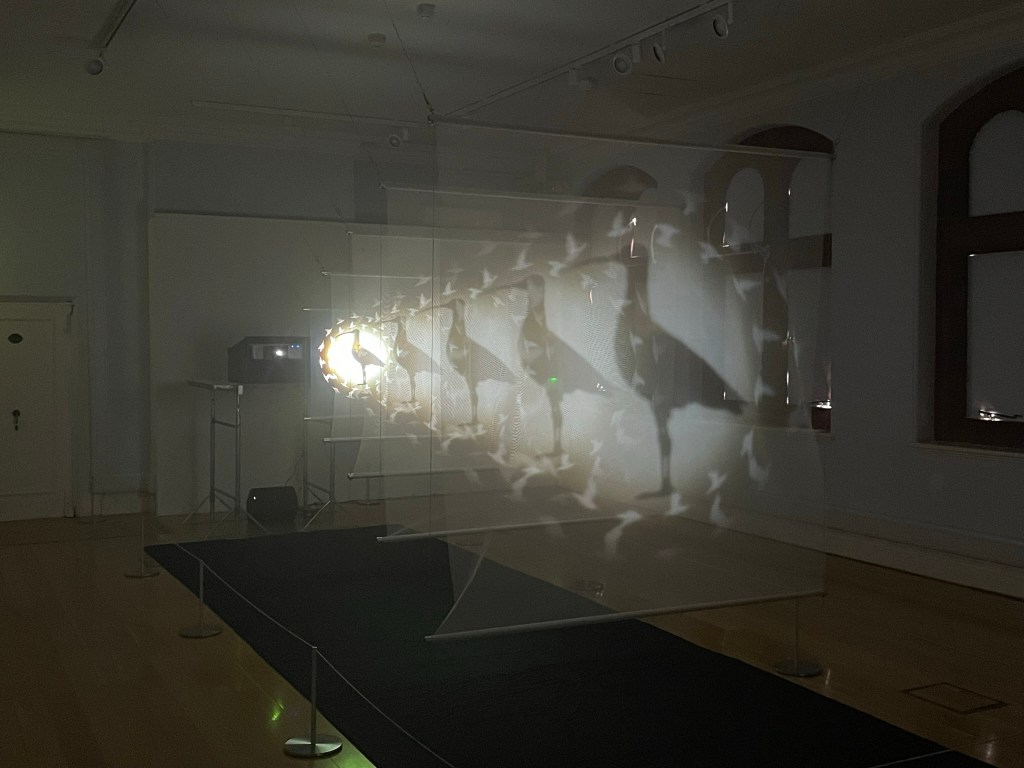
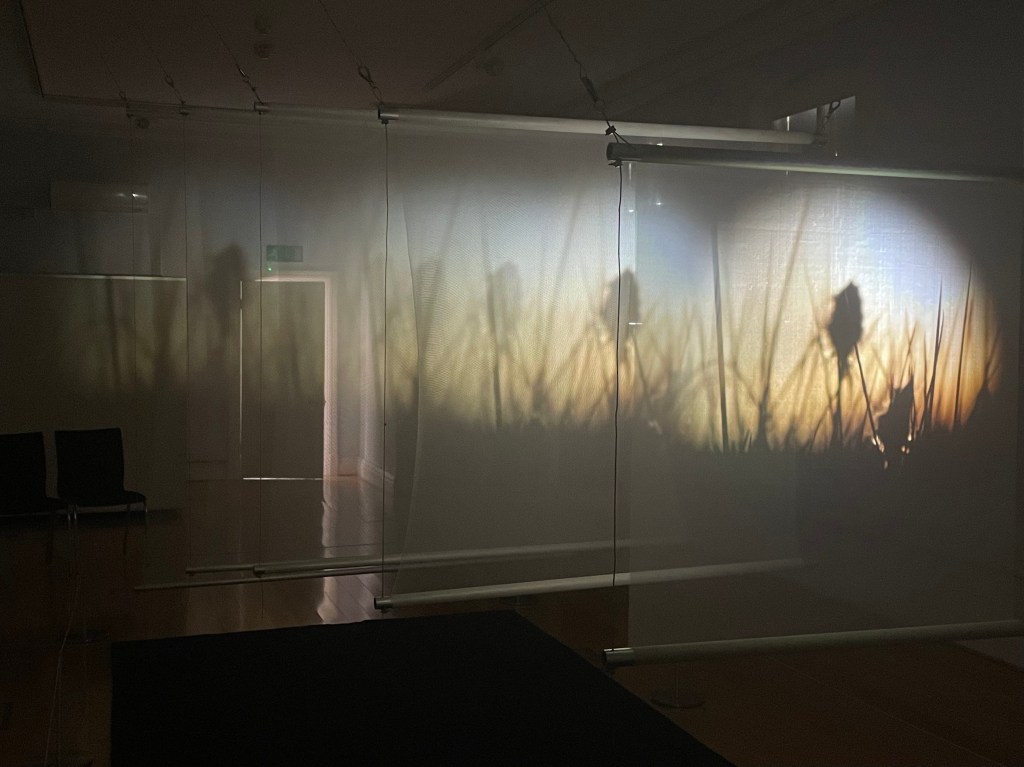
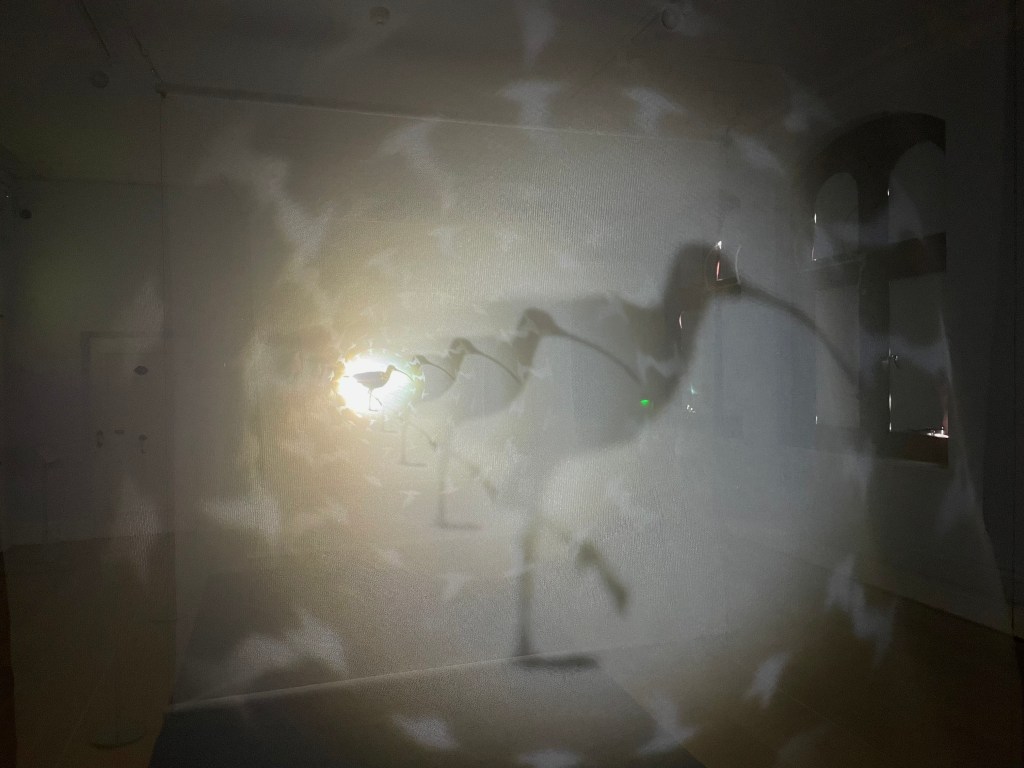
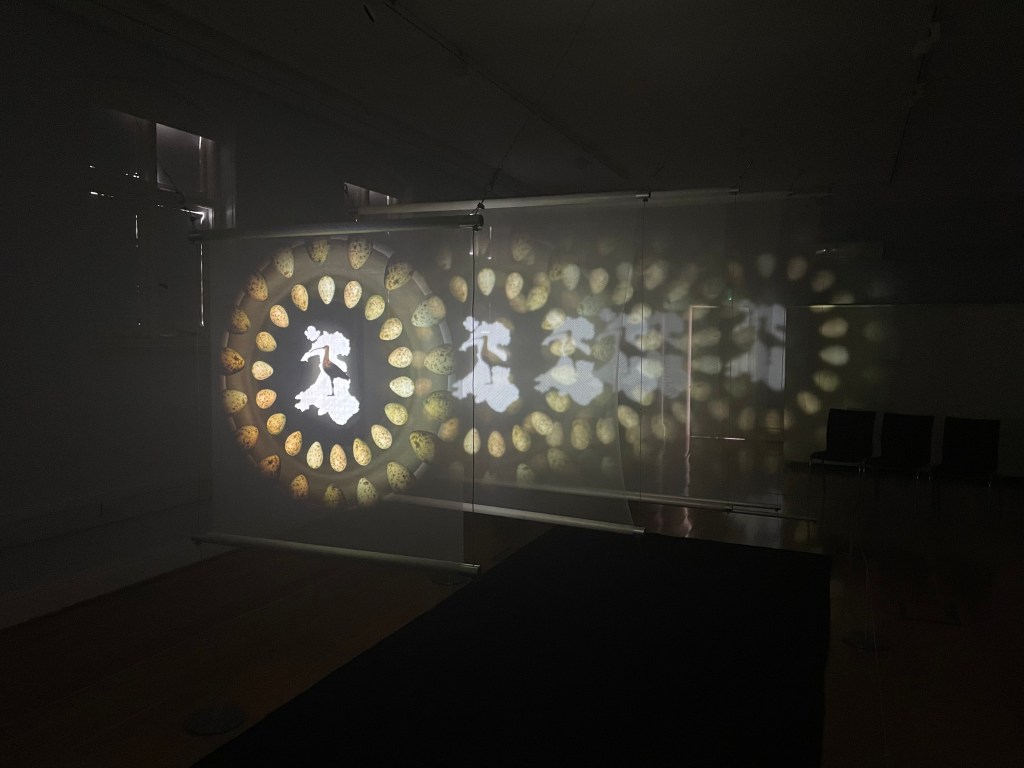
In the Senedd the curlew is advocating for a distant landscape stretching from the north coast of Wales down to the Berwyn and its environs; the latter a liminal zone straddling multiple boundaries and sparsely populated: therefore a bureaucratic inconvenience, kicked from pillar to post and too often overlooked. But here the floodwaters which increasingly engulf the urban centres of lowland Wales and western England gather and are held – or not. Here more carbon is sequestered per hectare than in the Amazon rain forest. Here are some of the deepest roots of the Welsh language and culture. Here, in a quiet but at times savage landscape, abides a profusion of life: a vital but rapidly diminishing component in the biodiversity on which we all utterly dependent.
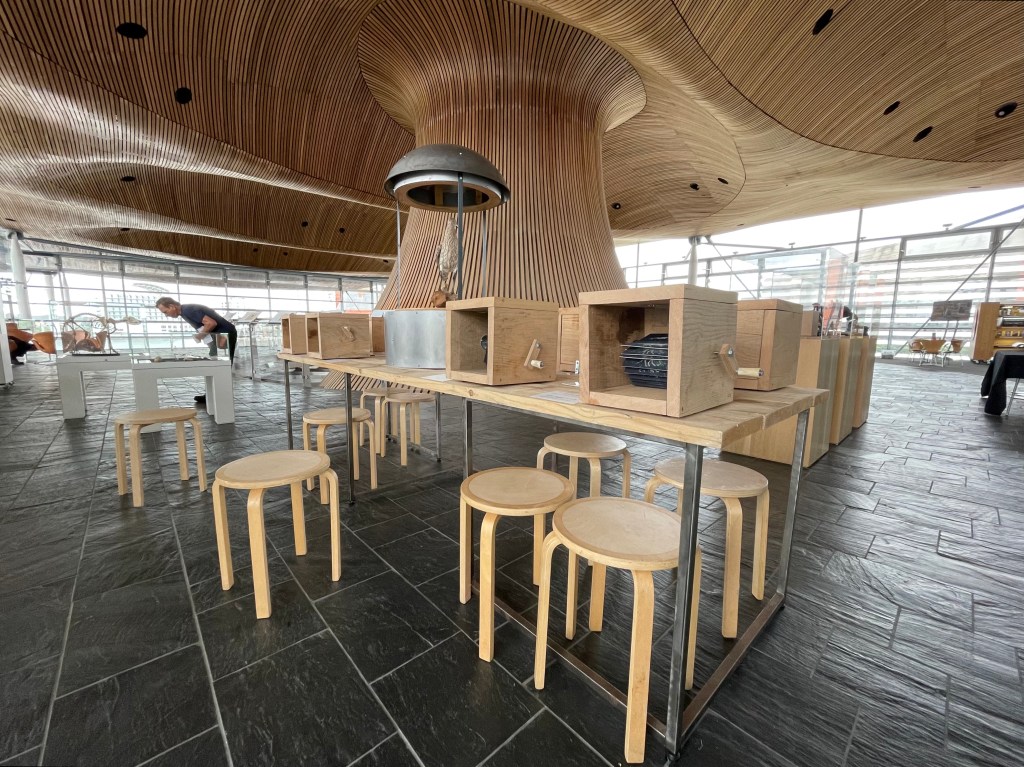

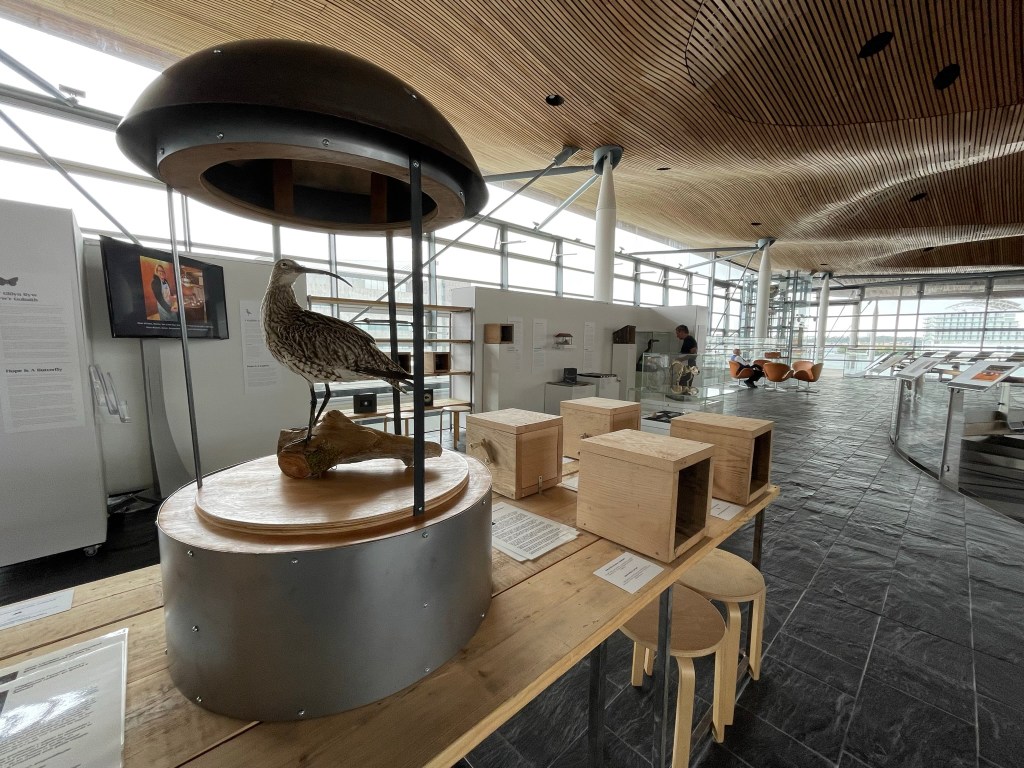
The presence of the curlew – its being and its meaning – within an exhibition in the Senedd might be construed as a ‘culmination’ for we like to place our centralised institutions on pedestals and imbue ‘product’ with undue emphasis. But this is an ongoing process and hopefully encountering it on a daily basis – and even becoming a part of it – will alter the perspective of the politicians whose thoughts and actions shape our daily lives. Perhaps it will have a similar impact on the many visitors from the nation’s capital, from all over Wales and beyond: in highlighting what is important, how values of respect for the land are upheld and why maintaining them is critical to our future well-being. And thus the wider perception of Wales’ ‘backyard’ will change, ultimately benefiting the landscape from which the animated artworks came – and to which they, in due course, will return to reconnect with the inhabitants, human and beyond human, that formed and informed them.
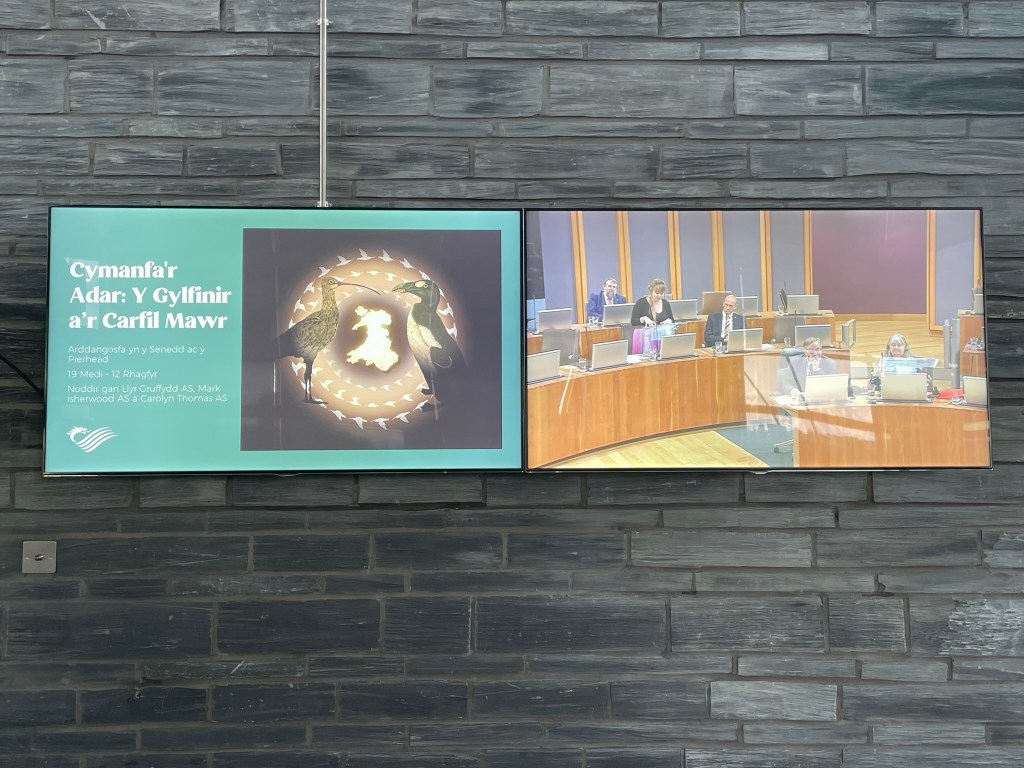
But perhaps the strongest, most potent act of advocacy comes from the community of Ysgol Bryn Coch, Mold. Pupils here – and their families – have been a part of the journey from its very earliest stages. Their film ‘The Curlew’s Story’ has emerged from experiences which catalysed a deeper exploration of time and change, loss and hope, taking them far beyond the sound bites and tropes of the mainstream curriculum and the societal messaging on which it is founded.
Entirely of their own making the film conveys issues of habitat loss, predation and climate change: the principal factors that have led to the curlew’s lamented status as conservation priority species number one. Many will find some of its truths uncomfortable and so it will undoubtedly raise debate. But perhaps most importantly it asks a question of us all. Will each of us, as individuals, undertake the actions now required to arrest the catastrophic decline in biodiversity which signals our own destruction? The choice is ours. The survival of the curlew is a matter for us all..
A bird, which twelve months ago none of the pupils knew of – despite it having being been a familiar part of their parent’s childhoods – has empowered them, given them a sense of purpose and thereby engendered hope. The call of the curlew, echoing its long held place in the hearts of hill farmers, will always be for them herald of spring, renewal – and nature re-animated.
In this – provided we ourselves listen and act – we should find hope.
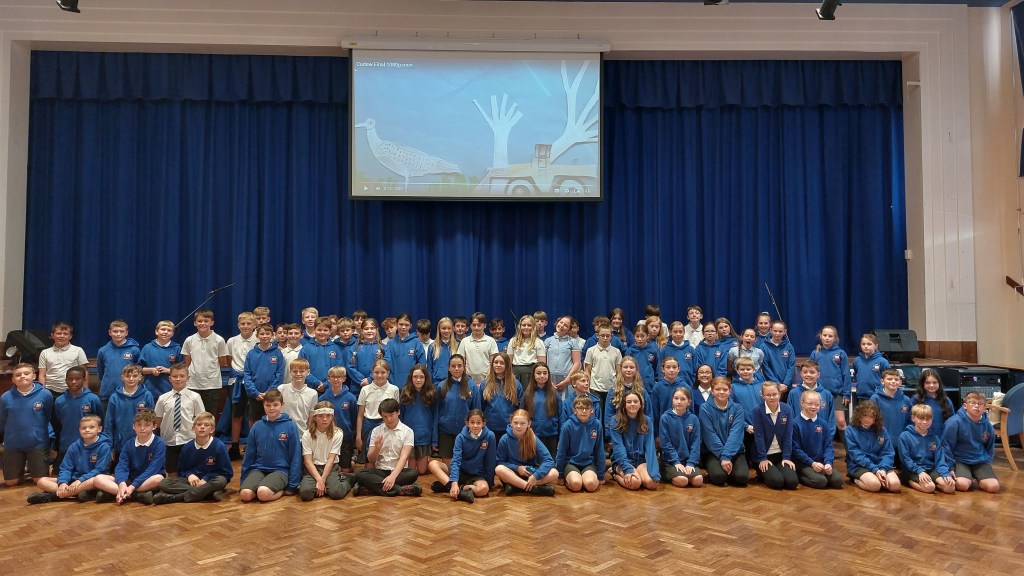
The engagement with Ysgol Bryn Coch was enabled by funding from the Clwydian Range and Dee Valley Area of Outstanding Natural Beauty’s Sustainable Development Fund.
 Sean Harris Artist Animation Wales